
06 June 2026
| Mobotics Admin
In today's rapidly evolving digital landscape, e-commerce is no longer just about selling products online. Customer expectations are higher than ever, technology is advancing at an unprecedented pace, and businesses must adapt to remain competitive.
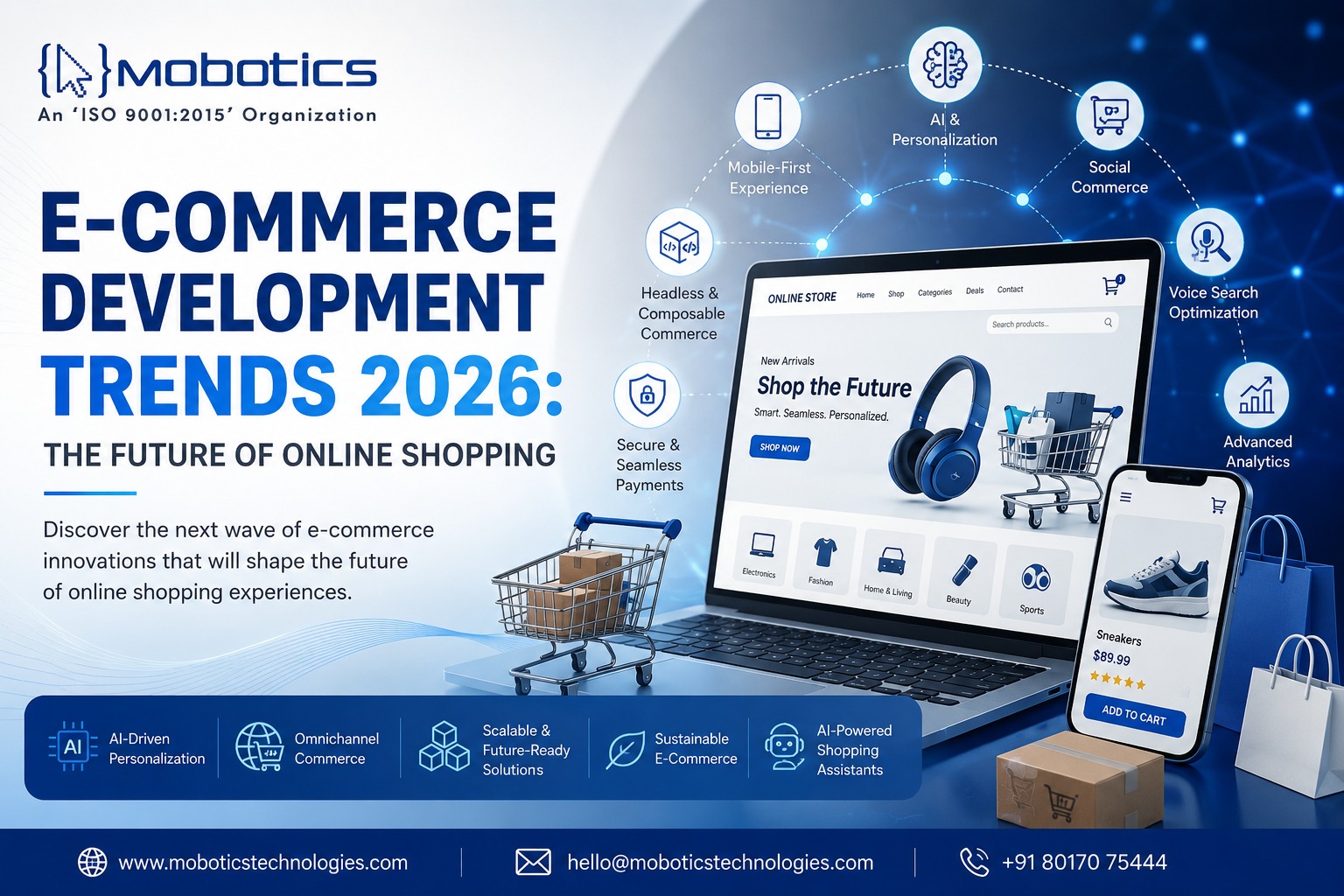
As we move through 2026, several emerging trends are reshaping the future of e-commerce development. Businesses that embrace these innovations will be better positioned to deliver exceptional customer experiences, increase conversions, and drive sustainable growth.
1. AI-Powered Personalization Becomes Standard
Artificial Intelligence (AI) is transforming the online shopping experience. Modern e-commerce platforms now use AI to analyze customer behavior, preferences, and purchase history to deliver highly personalized experiences.
Key applications include:
- Personalized product recommendations
- Dynamic pricing strategies
- AI-generated product descriptions
- Predictive search and shopping assistance
- Intelligent customer support
Customers increasingly expect tailored shopping experiences, making AI-powered personalization a necessity rather than a luxury.
2. Headless Commerce Goes Mainstream
Headless commerce is rapidly becoming the preferred architecture for modern online stores.
In a headless setup, the frontend (customer-facing interface) is separated from the backend commerce system. This allows businesses to create seamless shopping experiences across multiple channels, including websites, mobile apps, social media platforms, and smart devices.
Benefits include:
- Faster website performance
- Greater design flexibility
- Easier third-party integrations
- Enhanced omnichannel experiences
- Improved scalability
Many growing brands are adopting headless commerce to stay agile and competitive.
3. Composable Commerce Architecture
Businesses are increasingly moving away from monolithic platforms toward composable commerce.
Composable commerce enables companies to choose best-in-class solutions for:
- Payments
- Search
- Content Management
- Customer Data Platforms
- Marketing Automation
- Inventory Management
This modular approach provides greater flexibility and allows businesses to adapt quickly to changing customer demands.
4. Social Commerce Continues to Explode
Social media platforms have evolved into powerful sales channels.
Consumers are now discovering, researching, and purchasing products directly through:
- Instagram Shopping
- Facebook Shops
- TikTok Shop
- YouTube Shopping
- WhatsApp Commerce
Brands that integrate social commerce into their e-commerce strategy can significantly increase engagement and sales.
5. Mobile-First Shopping Experience
Mobile commerce continues to dominate online retail.
Modern consumers expect:
- Fast-loading mobile websites
- Mobile-friendly checkout processes
- One-click payments
- Progressive Web Apps (PWAs)
- Seamless user experiences across devices
Businesses that prioritize mobile optimization will benefit from higher conversion rates and improved customer satisfaction.
6. AI Shopping Assistants and Agentic Commerce
One of the most exciting developments in 2026 is the rise of AI-powered shopping assistants.
These intelligent systems can:
- Recommend products
- Compare prices
- Answer customer questions
- Complete purchases
- Automate customer support
As AI-powered commerce continues to evolve, businesses must ensure their product data, inventory systems, and content are optimized for AI-driven shopping experiences.
7. Omnichannel Commerce Becomes Essential
Customers no longer interact with brands through a single channel.
They may discover a product on social media, research it on a website, and complete the purchase through a mobile app.
Successful e-commerce businesses are creating unified experiences across:
- Websites
- Mobile applications
- Social media platforms
- Physical stores
- Customer support channels
A connected omnichannel strategy improves customer retention and brand loyalty.
8. Sustainability Drives Purchasing Decisions
Modern consumers are becoming more environmentally conscious.
Brands are responding with:
- Sustainable packaging
- Carbon-neutral shipping
- Ethical sourcing
- Transparent supply chains
Sustainability is increasingly becoming a competitive differentiator in e-commerce.
9. Real-Time Search and Product Discovery
Advanced search technologies are helping customers find products faster.
Modern e-commerce platforms now leverage:
- AI-powered search
- Visual search
- Voice search
- Predictive suggestions
- Personalized product discovery
A better search experience directly impacts conversion rates and customer satisfaction.
10. Future-Ready E-Commerce Requires Strong Data Foundations
As AI, automation, and omnichannel experiences become more sophisticated, businesses need accurate and unified data.
This includes:
- Product information
- Customer data
- Inventory management
- Pricing data
- Order management
A strong data foundation enables businesses to leverage advanced technologies effectively and deliver seamless customer experiences.
Conclusion
The future of e-commerce is intelligent, personalized, omnichannel, and AI-driven. Businesses that embrace emerging technologies such as AI-powered personalization, headless commerce, composable architecture, and social commerce will be well-positioned for success in 2026 and beyond
At Mobotics Technologies, we help businesses build scalable, secure, and future-ready e-commerce solutions that align with the latest industry trends. Whether you're launching a new online store or modernizing an existing platform, our team can help you create exceptional digital commerce experiences that drive growth and customer engagement.
Ready to future-proof your e-commerce business? Contact Mobotics Technologies today and take the next step toward digital commerce success.